

CES has always been a window into what’s next, and this year was no exception.
From agentic AI reshaping how media is bought and sold, to brands wrestling with creativity in an age of automation, to live sports tightening their grip on the media ecosystem, CES 2026 revealed where momentum is building, and where marketers and advertising need to be more intentional than ever.
Here are four key takeaways that stood out at CES 2026.
AI is producing a sea of sameness, creating an opportunity for brands that prioritize creativity
Brands that invested in AI have been rewarded with time-saving content at volume, duplicated creativity, and much more. As AI tools have become mainstream, the leverage of AI technology has diminished.
Currently, social media feeds have experienced a large uptick in AI-generated content that depicts similar creative. At CES, many brands expressed concern about ad effectiveness in their storytelling and creative. In fact, according to eMarketer, early two-thirds of consumers feel uncomfortable with AI-generated ads.
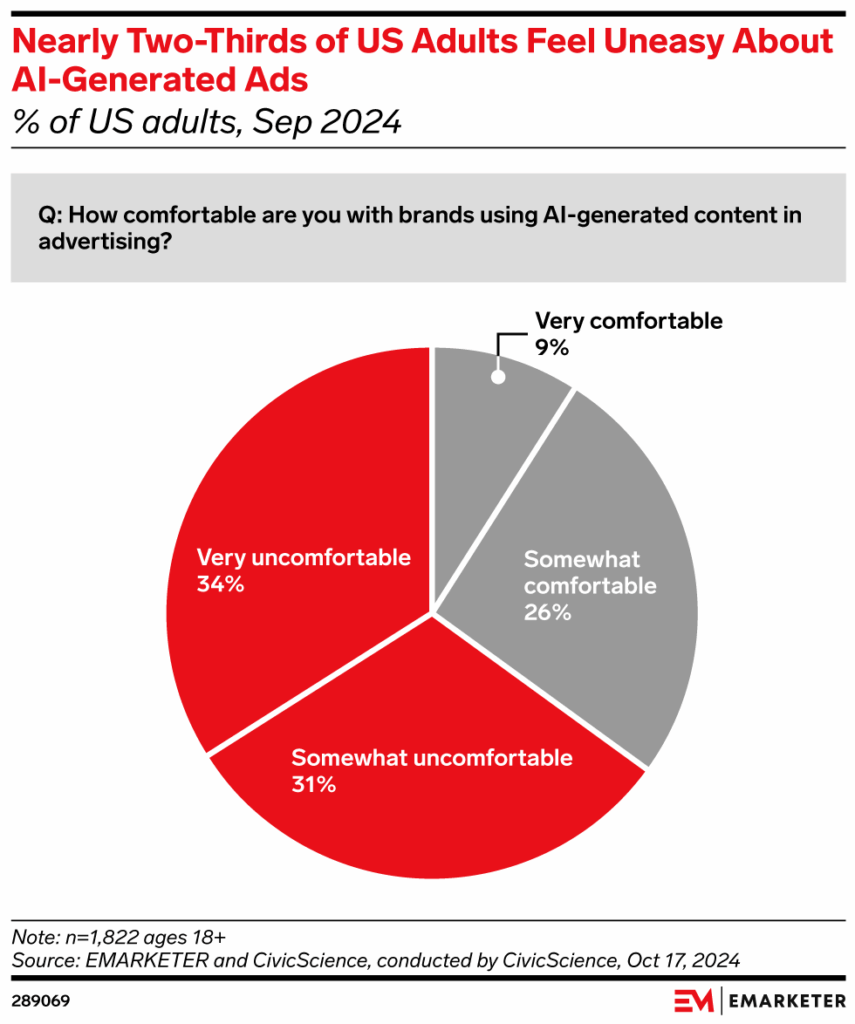
Experts at CES advised brands that creator-led storytelling will be a major asset to marketing and media planning, not because it can scale quickly, but because consumers seek a connection with advertising that feels human.
As attention metrics increase in importance, it’s important that brands save AI tools for enhancing human creativity as opposed to replacing it altogether. Brands that continue to invest in producing something emotional have an opportunity to rise above the AI clutter.
Live sports are still a juggernaut that will only get stronger
Stop me if you have heard this one. Live sports are a really big deal to linear and streaming platforms. With two global tentpoles, the World Cup and Winter Olympics, 2026 presents an exceptionally high-impact opportunity for brands to invest at scale.
The 2026 sports calendar comes on the heels of a record-setting holiday season, as Netflix’s Christmas Day NFL broadcast was the most-streamed NFL game in history. Amazon also set records with its Black Friday NFL and NBA games, and the NFL regular season produced historic high ratings for CBS, Fox, and NBC.
Speaking of the NFL, Ocean Media predicts that the NFL will renegotiate its broadcast rights early, ahead of the official 2029–2030 opt-out window.
At CES, media and sports executives made it clear that as media becomes more complex, sports become more essential, not less. Live sports are no longer just premium content; they are the strategic anchor that binds platforms, advertisers, and audiences across linear, streaming, retail media, and emerging ad models.
For platforms, sports function as both a subscriber driver and an advertising stabilizer, especially as AI, data, and new distribution models reshape how media is bought and sold. Streaming is also where most people are watching ad-supported TV.

While streaming opens up opportunities for access to ad inventory for sports broadcasts, high demand means expensive spots. However, brands with smaller media budgets can look to social media platforms during big tentpole events (like the World Cup and the Olympics) at a lower cost.
Redesigning streaming advertising for modern viewing habits
One of the clearest signals from CES was that short-form consumption habits are no longer confined to social platforms and are actively reshaping premium streaming ecosystems. Disney’s announcement of new vertical video initiatives within the Disney+ ad environment illustrates how even the most established streaming players are adapting to mobile-first behaviors.
As audiences increasingly move fluidly between short-form and long-form content, streaming platforms are being forced to rethink not just creative formats, but how ads are surfaced, consumed, and remembered within those environments.
At the same time, Amazon used CES to spotlight how interactivity is changing the role of advertising on Prime Video. Their research emphasized formats designed for engagement rather than passive exposure, reinforcing the idea that the living room screen is no longer a one-way experience. Viewers are increasingly open to interacting with ads when the experience feels intuitive and low-friction. Amazon’s findings validated many best practices already circulating in the industry, including the need for clear calls to action, simple and focused messaging, and interactions that feel native to the TV experience.
Perhaps the most practical takeaway for marketers was how viewers actually choose to engage. Amazon’s data showed that audiences are far more likely to use their remote than scan a QR code, a reminder that convenience often outweighs novelty. In a crowded streaming environment, reducing friction is critical.
Together, these announcements point to a broader shift in streaming advertising; success will be defined less by forcing new behaviors and more by designing ad experiences that align seamlessly with how audiences already watch, browse, and interact with content.
Agentic AI media buying and selling was at the forefront of conversations
CES made it clear that the conversation has moved beyond what the technology is to how it is actually used. For marketers, the real shift isn’t shiny innovation, it’s practical execution, trust, and control as AI-driven buying becomes inevitable.
Unlike traditional automation, agentic AI systems are designed to plan, decide, and execute tasks autonomously within defined guardrails, enabling them to manage media transactions and commerce activities end-to-end. While experts see a world of AI agents on the buy and sell side, it’s undetermined when it will go mainstream. While adoption is still incremental, announcements from major industry players demonstrate growing confidence that agentic AI will become a foundational operating layer for media and retail in the coming years.
As automation accelerates, transparency and trust have become critical differentiators. More than half of marketers trust agentic AI to plan and perform tasks, while 20% completely distrust the technology.
Industry leaders repeatedly emphasized the risks of opaque, “black box” systems that obscure optimization, measurement, and attribution, often allowing platforms to claim credit for growth rather than drive it.

The future of AI-driven media will favor partners and platforms that provide clear visibility into how decisions are made and how performance is measured, ensuring marketers retain control, accountability, and confidence as these technologies scale.
Much like the creativity takeaway above, it is important not to simply hand over the company keys to AI to decide everything, especially when real ad budgets are on the line. It is highly recommended to treat AI as a tool. That means streamlining repetitive tasks, test optimization scenarios, and freeing up human teams for strategic planning and creative execution. By combining the speed and scale of AI with expert oversight, brands can harness these emerging tools confidently, maximizing performance while minimizing risk as autonomous media buying evolves.