

Ad measurement is entering a pressure-tested phase. Not because the industry lacks tools, frameworks, or “next big ideas,” but because the gap between what measurement promises and what it actually delivers is getting harder for marketers to ignore.
Privacy shifts, automation, and platform consolidation have changed how media is bought faster than they’ve changed how it’s evaluated, and that imbalance is now showing up in real budget risk.
The three trends below aren’t tactical updates or vendor talking points. They’re signals of where measurement is holding, where it’s stalling, and where pressure needs to be applied.
Media Mix Modeling isn’t the answer, it’s the starting point
Media Mix Modeling (MMM) is experiencing a well-earned resurgence. As privacy changes and signal loss continue to challenge multi-touch attribution, brands are returning to MMM for its stability and privacy-resilient way to understand performance.
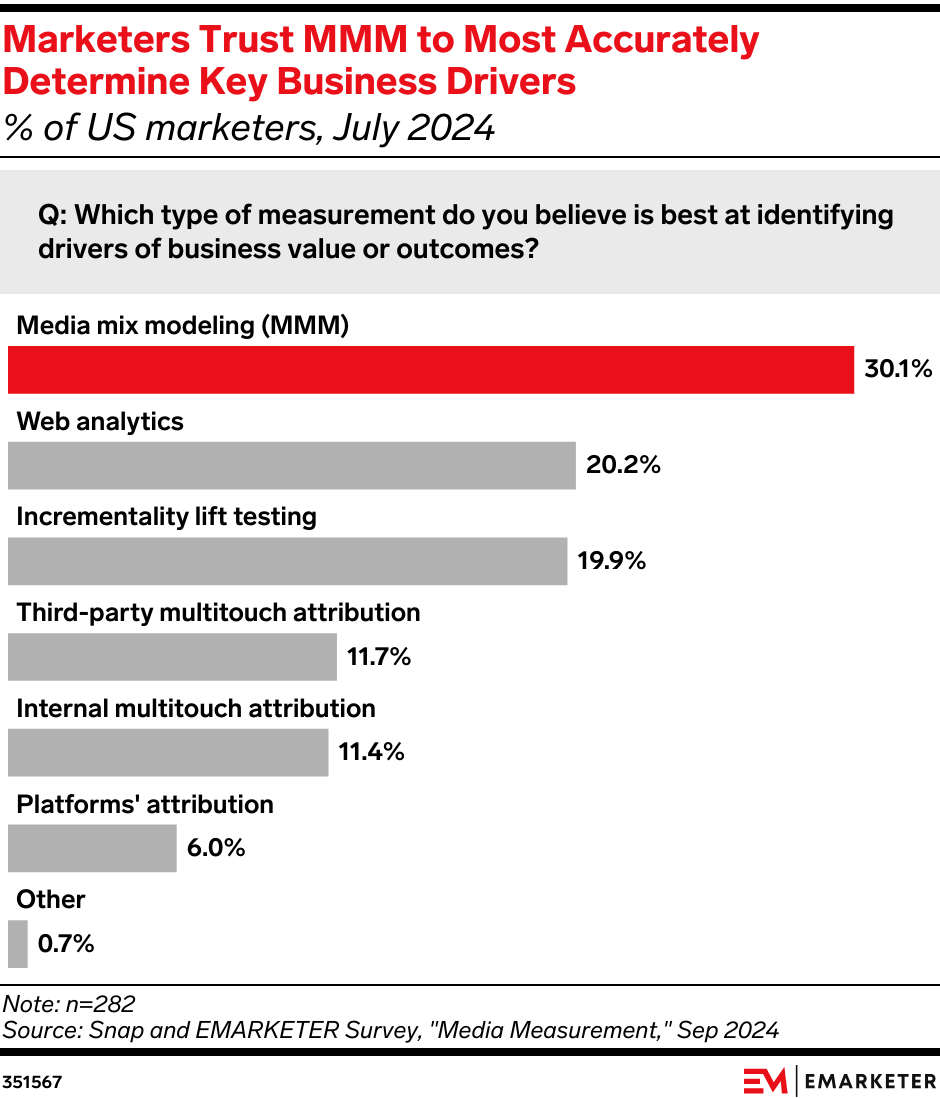
Where expectations often diverge is not in MMM’s value, but in how much it can realistically deliver on its own. MMM is designed for strategic insight, not tactical execution. Its outputs are intentionally aggregated, retrospective, and periodic, which are strengths for long-term decision making. However, when teams need answers quickly or guidance on in-flight optimization, it can be quite limiting.
Another challenge that often goes unconsidered is organizational. MMM insights rarely exist in one place or with one owner. Adoption requires alignment across analytics, media, finance, and leadership. Even when models are sound, translating outputs into decisions can stall amid competing priorities, timelines, and incentives. The result is insight that’s respected, but not always acted upon.
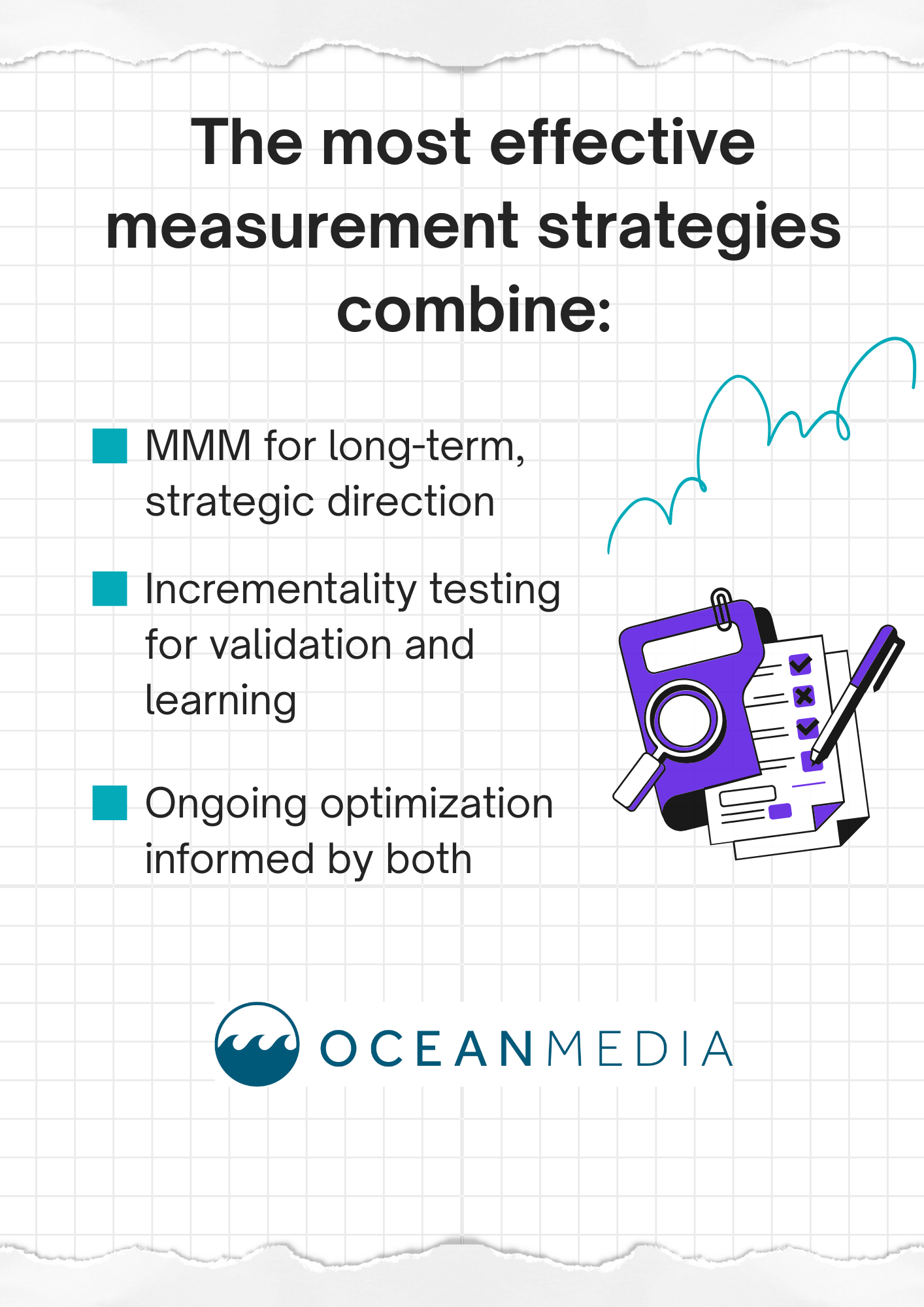
This is why more advertisers are pairing MMM with incrementality testing, particularly GeoLift studies. Incrementality introduces controlled experimentation into the measurement stack, helping teams isolate cause and effect, and build confidence in specific channels or tactics. Where MMM provides strategic direction, incrementality helps accelerate buy-in and learning.
MMM isn’t flawed, it’s just that no single measurement framework is sufficient on its own.
The real challenge is more commitment than methodology. Testing introduces opportunity cost, slower timelines, and short-term uncertainty, but brands willing to prioritize learning consistently make better decisions over time and avoid the endless loop of trial-and-error optimization.
Clean rooms remain high-promise, low-adoption
Whether you look back on year-end predictions or executives at CES promising the big moment, few concepts in ad measurement have generated as much hype, or as little momentum, as clean rooms.
Clean rooms offer a privacy-safe way for advertisers and platforms to collaborate on data, unlock deeper insights, and navigate a world with fewer identifiers. On paper, they are the promise to be a cornerstone of the post-cookie future. In practice, however, most clean room initiatives never make it past setup.
It’s understandable, as clean rooms are a big operational lift that requires multiple teams with competing priorities to work together. Going beyond your company’s resources, the barriers include lengthy contracting processes, procurement delays, and complex data governance requirements.
What typically happens is a cycle of enthusiasm followed by friction. Advertisers commit resources, begin implementation, and then get stuck navigating approvals, logistics, and integration challenges. That momentum fades, and the initiative quietly stalls.
Some marketers and agencies don’t even make it to the stage of implementation, citing budget concerns.
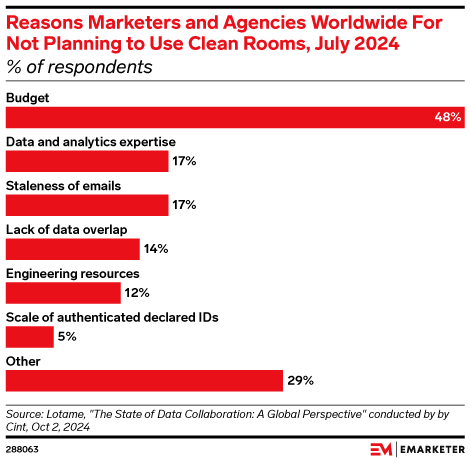
Until clean rooms are meaningfully simplified, both the implementation and contracting hurdles will remain aspirational rather than actionable for most advertisers.
The opportunity is there, and it is worthwhile, but opportunity alone doesn’t drive adoption.
DSPs still care more about buying than measuring
One of the most persistent challenges in ad measurement has nothing to do with data loss, privacy, or methodology. It’s incentive alignment.
Demand-side platforms (DSPs) exist to facilitate buying at scale. Their core value proposition is efficiency: making it easier, faster, and more automated for advertisers to transact across channels. As a result, the majority of product investment continues to flow toward buying-related functionality, like automation, optimization levers, audience activation, and workflow improvements.
Measurement is universally acknowledged as important, but it remains structurally secondary, largely because advertisers continue to spend even when measurement is imperfect.
As long as budgets are flowing, DSPs are rewarded for improving the mechanics of buying rather than the rigor of accountability. Measurement innovation does not drive revenue in the same direct way that increased spend, expanded inventory access, or improved bidding efficiency does. In many cases, measurement improvements actually introduce friction, such as more questions, increased scrutiny, and creating additional reasons to pull back spend.
Even DSPs that are positioned as leaders in measurement still have long-standing gaps. These aren’t failures of competence; they’re reflections of prioritization. Measurement tools often lag behind in transparency, flexibility, and actionability, not because they can’t be improved, but because improvement hasn’t been required.
This dynamic creates a familiar pattern for advertisers and agencies. Platforms release incremental measurement updates, but rarely overhaul foundational issues. Advertisers adapt their expectations instead of demanding better solutions. Over time, “good enough” becomes the standard.
What would change this trajectory isn’t another feature release or industry panel, it’s accountability.
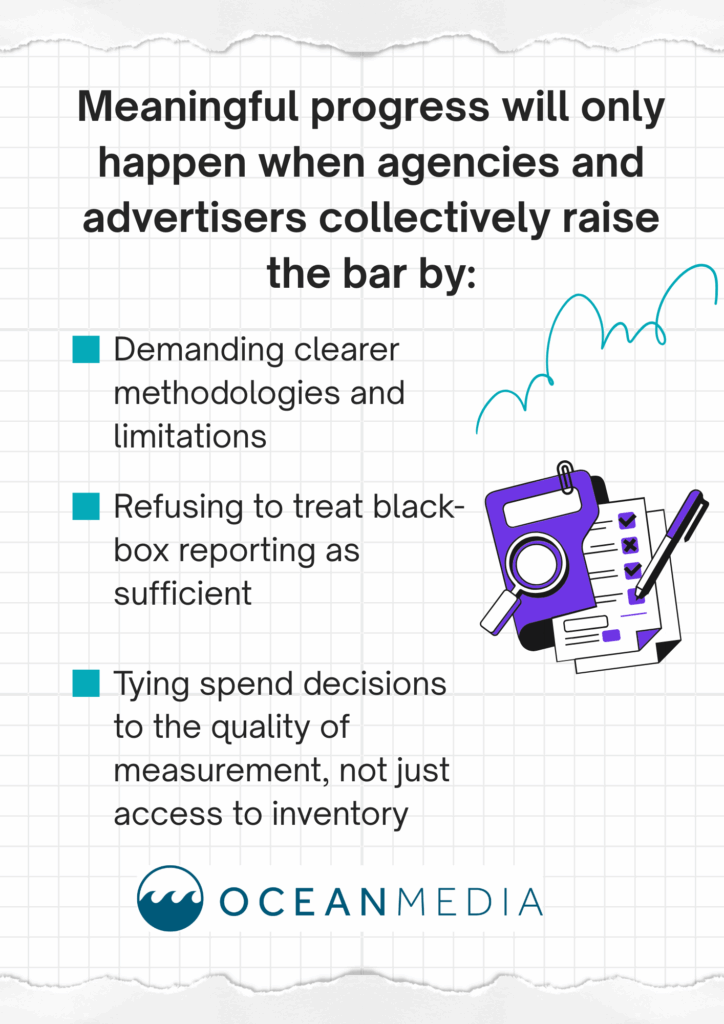
Until measurement quality becomes a competitive differentiator that influences budget allocation, DSPs will continue to prioritize what directly fuels transactions.
The uncomfortable reality is that measurement won’t improve simply because the industry agrees it should. It will improve when advertisers are willing to apply pressure by asking harder questions, slowing down spend when answers aren’t sufficient, and valuing insight as much as efficiency.
In that sense, the future of DSP measurement isn’t just a platform problem. It’s a buyer problem.
To learn more about how you can improve your measurement strategy, contact us!